|
Feline Infectious Peritonitis

FELINE INFECTIOUS PERITONITIS (FIP)
(A SUMMARY)
|
(Photocredit: morguefile.com)
|
Feline Infectious Peritonitis (FIP) used to be an untreatable disaster with 100% mortality, no diagnostic test and no treatment. Miraculously, things have changed with the development of new medication and now most cats can survive and live normal lives as long as they are treated in time. Questions still abound so we have decided to cover some basics here in an FAQ format. |
|
WHAT IS FIP?
Feline Infectious Peritonitis is a syndrome that results from wide-spread infiltration of the body’s organs with inflammatory tissues called “pyogranulomas.” The resulting global inflammation leads to the failure of the infiltrated organs, fevers unresponsive to antibiotics, and often the accumulation of thick yellow fluid in the belly or chest. The “wet” form of FIP, includes the effusion of thick, yellow fluid as noted. The “dry” form is more insidious, leading to death over a much longer period (potentially years, but more usually weeks to months). Symptoms still involve fevers and poor appetite with the dry form but also commonly involve deep inflammation in the eyes and nervous system. Without treatment, the wet and dry forms have been felt to have 100% mortality.
|

cat with distended abdomen from fluid accumulation
(original graphic by marvistavet.com)
|
IS FIP CONTAGIOUS?
Very simply, the answer is no. FIP stems from infection with the enteric coronavirus of cats but FIP is not contagious.
|
SO HOW CAN AN INFECTIOUS DISEASE NOT BE CONTAGIOUS?
FIP indeed begins with a contagious infection with the feline enteric coronavirus. This is a very contagious virus with 70-100% of cats housed in groups testing as having been exposed. The feline enteric coronavirus is a contagious virus but most cats that get infected just get temporary flu-like symptoms (fever, diarrhea, malaise). For most cats, it never goes farther than that but in some cats the virus will mutate. What makes it mutate? We know that the more times a virus replicates, the greater the chance that a DNA mistake will occur. What makes the virus replicate more? Repeated exposure by sharing a litter box with an infected cat and/or Stressful events (surgery, adoption, boarding etc.) that suppress the immune system are the most common situations.
There are several mutations that might allow the enteric coronavirus to escape the GI tract and be able to travel throughout the body but these mutations occur within the already infected cat. The enteric corona virus is contagious but it is a unique body response that creates the FIP virus.
|
(Photocredit: Morguefile.com)
|
|
WHAT DO WE KNOW ABOUT THE FELINE ENTERIC CORONAVIRUS?
Here are some basics about this virus:
- It is common wherever cats are housed in groups and it is readily transmitted between cats.
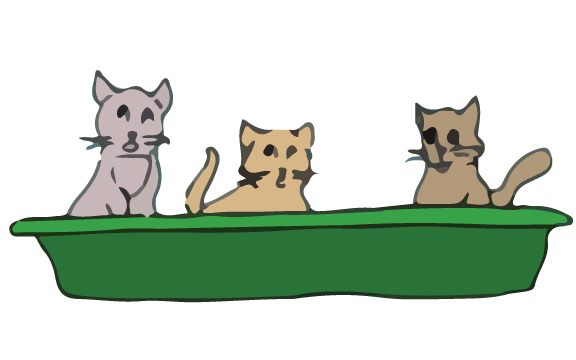
- Transmission is typically by contact with infected feces. This means that the litter box is the usual place where infection takes place. Coronavirus infection is unusual in cats that free-roam outdoors (no litter box) or who live in homes where there is only one cat. The virus enters the new host’s body via the nose and mouth. Coronavirus readily sticks to clothing and can be transported easily this way. Coronavirus also survives up to 2 weeks in cat litter dust.
|
|
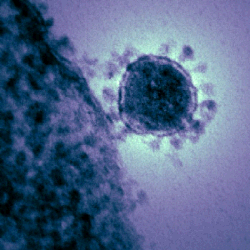
Electron Micrograph of a Coronavirus
showing the characteristic halo-like
structures for which it is named.
(Photocredit: CDC Public Heath Image Library)
|
- An active infection lasts several weeks to a few months. Virus is shed in the infected cat’s stool during this period. If the cat is reinfected, virus sheds again for weeks to months. During this time, the cat may or may not seem at all ill. Some infected cats do not shed virus.
- Households with fewer than 5 cats eventually spontaneously clear of coronavirus. Households with more than 5 cats virtually never clear of coronavirus.
|
 (original graphic by marvistavet.com) (original graphic by marvistavet.com)
|
- Most household disinfectants readily kill coronavirus immediately. Room temperature kills coronavirus within 48 hours. Carpeting is protective to the virus and the virus is able to survive in carpeting for at least 7 weeks.
- Once a cat has been infected with the virus and recovered, the cat can be easily re-infected by continued exposure to infected feces. In this way, many catteries where there are always cats sharing litter boxes never rid themselves of this infection.
- The enteric coronavirus attacks intestinal cells and creates GI upset. As the long as the infection is confined to the GI tract, there will be no FIP.
|

(original graphic by marvistavet.com)
|
TRANSFORMATION OF CORONAVIRUS INTO FIP VIRUS
The process of immunological defeat of the virus involves a cell called a “macrophage.” The macrophage consumes infected material, packages it in special structures which are then flooded with acids and digestive enzymes, destroying the package contents. Any virus inside the package is killed by this process and its components are then used by the immune system to help mount a specific immunological reaction (i.e. make the proper antibodies, send specific killer cells etc.) against further virus.
|
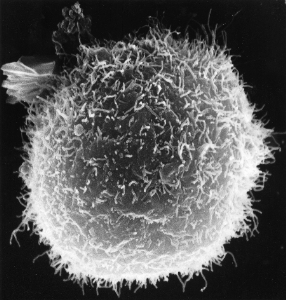
A macrophage is called to areas of inflammation to consume
and destroy cells and organisms that do not belong. The invader's
parts are displayed on the macrophage's outer surface to
facilitate stimulation of antibody producing lymphocytes.
(Photocredit: Public Domain Graphic from United States Department of Health and Human Services)
|
The FIP virus is generated when the coronavirus mutates within the body of an infected cat. This mutation occurs during infection and allows the virus to survive the treatment by the macrophage. Instead of being killed by the macrophage, the virus essentially uses the macrophage to hitch a ride into the body’s core. The macrophage attempts to kill the virus within it but cannot. Soon there are heaps of ineffective macrophages and immunologic proteins which make up a special inflammatory tissue called a "pyogranuloma." FIP is basically the infiltration of normal organs with pyogranulomas.
The mutation to a form of virus that can cause FIP is more likely to occur in a cat with an immune-compromise. Most cats with FIP are under age 1 year (their immaturity being their immune-compromise). Crowding is also an important source of immune-compromise. Another important factor in mutation is multiple exposure/infections. When cats keep getting reinfected the virus they carry has more chance of mutating to a form that causes FIP.
|
Factors that increase the chance of coronavirus mutation include:
- Genetics
- Early weaning
- Overcrowding
- Age at the time of coronavirus infection
- Surgery stress (usually spay/neuter)
- Sharing litter box with other cats
|
(Photocredit: Morguefile.com) |
WHY ISN’T THE MUTATED VIRUS CONTAGIOUS?
We do not know why. We can inject fluids from a cat with FIP into a normal cat and cause FIP but short of this kind of experimental transmission, the mutated virus doesn’t seem to make it into the natural external secretions of an infected cat. This effectively confines the mutated virus inside the sick cat’s body, though the sick cat will still shed non-mutated virus. It appears that genetics plays a very large role in the mutation of the virus with every FIP cat developing its own unique mutation. A virus that causes FIP in one cat may not do so in another cat.
HOW IS IT POSSIBLE THERE IS NO TEST FOR THIS CLASSICAL DISEASE?
|
We used to think that the difference between getting the “cat stomach flu” and getting FIP was all about the strain of the virus with which a cat gets infected. Lots of time and effort was spent trying to determine what made the “FIP virus” different from ordinary enteric coronavirus. We no longer think there is a “special” strain of virus that causes FIP. FIP results, as described above, from a mutation that occurs in the virus after infection has occurred. Actually, it's even more complicated: there isn't only one mutation that transforms regular coronavirus into the FIP virus. Many mutations can do it and we may not even have identified all of them. Whether or not these mutation occur in any given infection caes seems to relate more to the immune status of the cat than any factor in the virus. The more virus there is replicating, the greater the chance of one of the FIP mutations occurring.
|

(original graphic by marvistavet.com)
|
|
WHY CAN’T WE JUST TEST FOR MUTATED VIRUS?
The mutation isn’t the same every time. There are two relevant viral genes and the mutation pretty much always involves at least one of them but the mutation can occur in any number of places within either of these two genes. Right now the best testing involves PCR testing for viral DNA on effusive body fluid generated in the wet form of this disease. This is not helpful if the cat has the dry form, obviously.
|
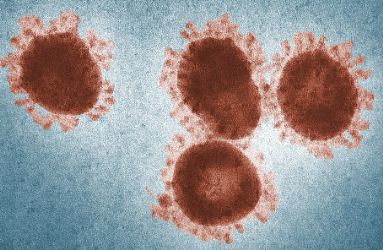 A group of coronaviruses A group of coronaviruses
(Photocredit: CDC Public Heath Image Library) |
WHAT KIND OF TESTING IS AVAILABLE?
At this time the diagnosis of FIP is “clinical.” This means that there is no positive or negative test; the doctor must look at the sum of several findings. These are some of the findings that are coupled with the physical examination and history findings to come up with a diagnosis of FIP.
We have already discussed the symptoms (fevers, eye inflammation, poor appetite, fluid accumulation). Most FIP patients are between ages 3 and 16 months. Most patients get the "wet" form and thus have an effusion of fluid in the belly; in fact, 50% of all belly fluid effusions in cats are caused by FIP. Tests can involve blood or a fluid sample from the chest or belly but it is important to realize that test results are just part of the total picture. There is no definitive blood test for FIP. Here are some tests you may hear or read about:
- Testing the Belly/Chest Fluids
FIP classically produces a clear but viscous yellow effusion, usually in the belly chest or both. The fluid typically has a total protein level greater than 3.5 mg/dl. At this time, the most accurate test involves PCR testing for virus DNA in the fluid. There is no reason for enteric coronavirus DNA to be anywhere outside of the GI tract.
- The Albumin to Globulin Ratio
FIP tends not only to elevate globulin levels but it also tends to decrease albumin levels. Albumin is an important carrier protein in the blood and one’s body tends to conserve it at all costs. Albumin could be lost in the course of FIP but the ratio mostly changes because of increases in globulin levels because of antibodies being produced. Normal cats have an albumin:globulin ratio > 1.0. If the albumin to globulin ratio is less than 0.8, there is a 92% statistical chance that the cat has FIP. If the ratio is greater than 0.8 there is a 61% chance the cat does not have FIP. The albumin:globulin ratio is usually included in basic lab work or it can be easily calculated.
- Elevations in Total Protein, Alpha-2 and/or Gamma Globulins
Total serum protein is a simple value that can be checked in virtually every animal hospital in a matter of minutes. Cats with FIP commonly have very high serum protein levels. That said, there are many types of proteins in the blood. If a blood panel is checked on a cat with FIP, serum protein is often divided into albumin and globulin amounts (adding these together provides the “total protein” level.) When protein levels are broken down into these two groups, it will be the globulin level that is elevated. If the globulin level is further broken down, using a special test called “electrophoresis,” it will be found that it is the “gamma globulin” and "alpha-2 globulin" levels that are elevated. The gamma globulins include antibodies and the FIP infection classically creates so much immune reaction that all antibody levels are elevated.
|
(Photocredit: Morguefile.com)
|
- “Rivalta’s Test”
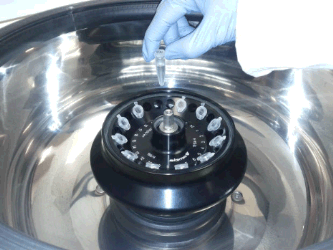
This is a test with which few veterinarians are familiar but it can be very helpful in the diagnosis of FIP. A test tube is filled with distilled water and one drop of 98% acetic acid is added. To this mixture one drop of effusion is added. If the drop dissipates, the test is negative. If the drop retains its shape, the test is positive. A negative Rivalta’s test is 97% accurate in ruling out FIP. A positive test is 90% accurate in ruling in FIP in cats under age 2 years of age. It is important to realize that a Rivalta's test is basically a test to identify a high protein body fluid and FIP is not the only disease that produces a high protein body fluid. The Rivalta's test should be considered along with the rest of the patient's clinical picture.
- Tissue Biopsy
Most FIP cats are too sick for surgery, though sometimes flushing away the belly effusion surgically provides a “rally” of improvement temporarily. A tissue sample is the best method for confirming FIP as there are few conditions that create pyogranulomas throughout the body but if regular biopsy is equivocal, tissues can be stained for the presence of coronavirus and only in FIP will there be enough coronavirus within macrophages for positive staining. A positive tissue stain is 100% accurate in confirming FIP.
- The FIP Titer
This test is often included on a feline blood panel and reflects a cat’s circulating antibody level against coronavirus. The problem is that exposure to coronavirus is common in cats and is not particularly meaningful in diagnosing FIP. Further, cats with fulminant FIP may not be producing FIP antibodies and can have negative titers. The only time such a titer might be useful is if one is screening a healthy cat for coronavirus; in this event a negative titer would indicate that the cat will not be shedding virus and can be introduced into a coronavirus free living situation. Many breeders strive for coronavirus-free catteries and such screening is important. The test is not helpful in diagnosing FIP in a sick cat, however.
|
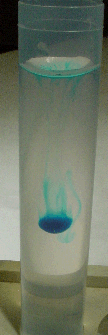 High protein droplet indicating High protein droplet indicating
a positive Rivalta's test.
(Photocredit: Kalumet via Wikimedia Commons) |
FINALLY THERE IS EFFECTIVE TREATMENT
|
The development of a drug known simply as GS-441524 has changed everything for cats with FIP. GS-441524 is well tolerated even at high doses and has produced cure of this once guaranteed fatal disease. Initially, it was available only through routes of questionable legality (i.e. the Chinese black market) but gradually the value of this drug became clear and legal routes for use became available. (Note, it still does not have a brand name due to reluctance of its manufacturer to pursue a feline market approval.)
Courses are long, typically 84-120 days but response is so rapid that a rapid response can be considered confirmatory of the FIP diagnosis. At first, a daily injectable product was recommended but oral versions as liquids, capsules and chewables are now obtainable from compounding pharmacies. Higher doses are needed for the neurologic forms of FIP and some cats appear to need indefinite treatment. Not every cat will have a positive outcome.
|
(Photocredit: Morguefile.com)
|
GS-441524 is an active metabolite of Remdesivir, a drug made famous during the COVID-19 pandemic. Remdesivir can also be used in the treatment of FIP and, since it could be legally obtained when the GS drug could not be, many cats were and are still treated with it. Your veterinarian will guide you with the most appropriate recommendation.
WHEN A CAT DIES OF FIP WHAT IS THE INFECTION RISK TO THE REMAINING CAT?
|
You can bet that the roommate cat has already been infected with the coronavirus if a cat in the home has been diagnosed with FIP. If there are only one or two surviving cats, the chances are that in time the virus will completely clear and they will stop getting reinfected. Surviving cats are felt not to have any higher risk over the general population for developing FIP from their coronavirus, though a littermate of the FIP cat might have a slightly higher incidence due to predisposing genetic factors.
|
|
WHEN IS IT SAFE TO GET ANOTHER CAT AFTER ONE DIES OF FIP?
Since this is not a contagious disease, one does not need to wait before getting another cat. If one wants to see that there is no remaining coronavirus around the house leftover from the deceased cat, a 3 month period has been advocated; however, since coronavirus is very common (in one study 90% of shelter kittens were infected and shedding virus), it is not easy to insure that the new cat will not be carrying virus already. The short answer is, as long as there are fewer than 5 cats in the home, FIP is not likely to continue to be of concern.
ISN’T THERE A VACCINATION?
|
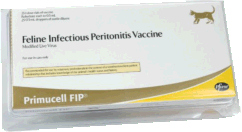
Developing a vaccination has historically been fraught with difficulty simply because it is the immune response against the virus that causes the disease. How does one make a vaccine without creating the same immune response against the virus? Zoetis (formerly Pfizer Animal Health) has developed the only FIP vaccine on the market by using a temperature sensitive mutant coronavirus. This virus is inoculated into the cat’s nose. The modified virus in the vaccine is incapable of spreading beyond the nose and throat because it cannot survive at body temperature. In the nose and throat, however, it generates a localized immune response that prevents a coronavirus from effectively entering the body. The effectiveness of this vaccine has been questionable and remains in controversy. The vaccine is given to cats over age 4 months of age and is thus not helpful in the chief situation where a vaccine could do the most good: the breeding cattery. Because most cats are not at risk for FIP infection and those that are, are at risk at an age too young for the vaccine, most veterinary teaching hospitals do not stock this vaccine.
|
|
The ideal candidate for vaccination would be an uninfected cat going to a cattery where litter box sharing is likely. This would seem to be an unusual situation but it might come up in these circumstances:
- A feral cat is moved into an indoor or shelter colony. (It is not unusual for FIV+ cats, that is, cats infected with the Feline Immunodeficiency Virus, from feral colonies to be removed from the colony and put in a sanctuary for FIV+ cats).
- A cat from a single cat home is released to a rescue group goes to a foster home where there are a large number of other cats already present.
- A cat moves from a single cat home to live in a multi-cat home.
Vaccination was able to reduce the infection rate in exposed cats but not all cats will be protected.
IS INFECTION LIMITED TO CATS?
Yes. Dogs and humans cannot get sick from feline coronavirus. The feline enteric coronavirus is not involved in SARS (severe acute respiratory syndrome) nor Covid-19 though both human infections are caused by coronaviruses.
We still include the following external links for further information:
For a Really Good FAQ:
(Frequently Asked Questions)
www2.vet.cornell.edu/departments-centers-and-institutes/cornell-feline-health-center/health-information/feline-health-topics/feline-infectious-peritonitis
About On-Going Research
www.sockfip.com
FIP is a serious disease and death will result without treatment. We are immeasurably fortunate to have effective medication for this once hopeless disease. We hope that the information above is helpful and gets your cat effective treatment.
Page last updated: 5/4/2026
| 
 Processing ....
 A group of coronaviruses


