3850 Grand View Blvd. - Los Angeles, CA 90066 - Phone:(310) 391-6741 - Fax:(310) 391-6744 - Email: MarVistaAMC@gmail.com
3850 Grand View Blvd. - Los Angeles, CA 90066 - Phone:(310) 391-6741 - Fax:(310) 391-6744 - Email: MarVistaAMC@gmail.com
(310)391-6741
marvistavet.com
|
IRRITABLE BOWEL SYNDROME (IBS)
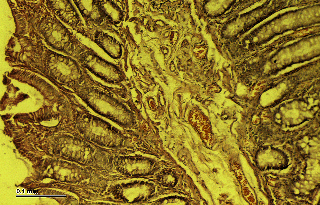
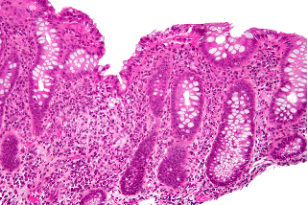
The signs of inflammation in the large intestine (also called the “colon”) are the same regardless of cause: a gooey, mucous diarrhea, straining to pass stool, cramping, and sometimes a surprise urgency to “go.” These symptoms can be acute (as is common with a short term stress like boarding, return from boarding, or diet change) or they can be chronic as with whipworm infection or inflammatory bowel disease. Many people get confused between inflammatory bowel disease (IBD) and irritable bowel syndrome (IBS). Inflammatory Bowel Disease is a physical disease where the intestinal lining is infiltrated by inflammatory cells. The delicate intestinal lining becomes thickened and absorption of nutrients becomes altered. The infiltration can be seen under the microscope and this is how the diagnosis is confirmed. Inflammatory Bowel Disease is a completely different disease from Irritable Bowel Syndrome so if you are looking for information on Inflammatory Bowel Disease, please click the link above.
IBS is a psychosomatic disease. It is the activity of the mind that causes the symptoms. Most people have had some kind of experience where stress has produced intestinal distress, be it cramping, nausea, diarrhea or all of the above. The medical definition of IBS for humans includes at least 3 days of abdominal pain per month for at least 3 months so we are talking about something long term. Chronic anxiety can similarly result in chronic diarrhea. This is basically what IBS is all about. Intestinal biopsy results are normal because there is nothing directly wrong with the large intestine. The process is the same whether the patient is human or non-human. Large intestinal diarrhea in veterinary patients can have many causes and IBS is afoot in about 10-15% of cases. It is important to rule out physical causes before blaming psychological reasons but if all tests are normal and treatment for physical problems is not yielding results, this is when a biopsy is helpful. If after medication trials, diet trials, and diagnostic tests including biopsy are all normal, the it is time to consider IBS. It should be noted that fresh blood in the diarrhea is common with large intestinal diarrheas but so much with the large intestinal diarrhea of IBS. Fresh blood in the diarrhea is a sign that there is a physical cause and not a psychosomatic cause. Knowing this can help direct the medical approach.
TREATMENT OF IBS IBS can be managed either through the GI tract or through the psyche. Some of the effectivehuman remedies have not been evaluated for animals but others have been: Insoluble Fiber
Probiotics Anxiety Management
Alpha Casozepine - This is a milk protein with natural calming properties. It is available as an oral supplement (Zylkene®) for pets or in special calming pet foods (Royal Canin Calm Diet®, Hills Urinary Stress C/d for cats®).
A more aggressive approach might be addressing the anxiety with medications. The source of emotional stress may not be obvious but general anti-anxiety medications such as amitriptyline, clomipramine, or fluoxetine may be of use, particularly if the anxiety source is not clear or cannot be removed. Some patients will respond to supplements as listed below. It is important to imagine the pet’s world from his/her own perspective. The pet does not speak English and must infer what is going on from events he or she witnesses directly. Inconsistent scheduling, moving to a new home, noisy construction nearby, or even weather changes can be very confusing for an animal.
Page last updated: 9/15/26 |
|
HOURS
|
MAR VISTA ANIMAL MEDICAL CENTER
3850 Grand View Blvd.
|
 Processing ....